What to Do When You Arrive in Santiago de Compostela: Post-Camino Guide
Complete guide for your arrival in Santiago: how to get the Compostela, Pilgrim Mass, botafumeiro, embracing the Apostle, what to see, Finisterre and how to get home.
You've made it to Santiago. Now what?
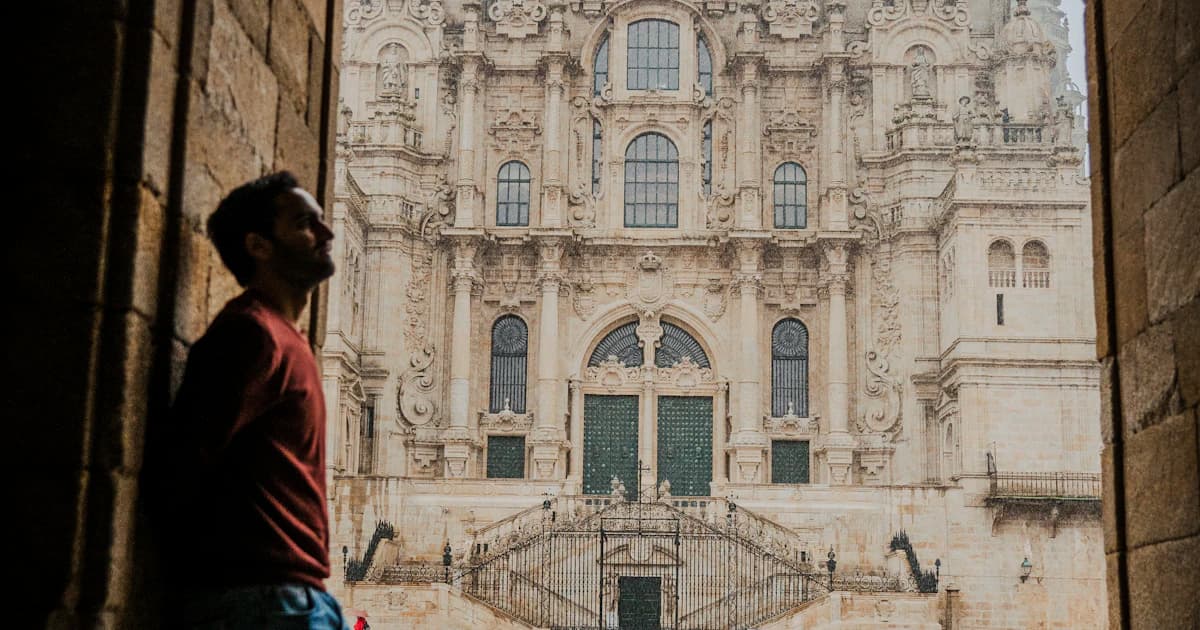
After days of walking, you cross the Porta do Camiño, head down the Rúa de San Pedro and suddenly you're standing in the Praza do Obradoiro, staring up at the Cathedral facade with a mixture of euphoria and emptiness. That's completely normal. This guide tells you exactly what to do in your first hours and days in Santiago to close the Camino in the way it deserves.
1. Collect your Compostela at the Pilgrim Office
The Oficina de Acogida al Peregrino (Rúa Carretas, 33, 300 m from the Obradoiro) issues the Compostela, the official certificate that proves your pilgrimage.
- Requirements: you must have walked at least the last 100 km (from Sarria or further back) with a stamped pilgrim credential — two stamps per day over the last 100 km.
- How it works: register online on the Pilgrim Office's official website, get your number and wait for your turn (the app notifies you). In high season there can be a 1–2 hour queue: go early or late in the day.
- Extras: for a few euros you can also request the distance certificate, which records your exact kilometres and starting point. A lovely keepsake.
2. Pilgrim Mass, embracing the Apostle and the botafumeiro
The Pilgrim Mass is held daily at noon (and in the afternoon) in the Cathedral. No ticket is needed, but arrive 45–60 minutes early to get a seat.
Inside the Cathedral, two rituals you shouldn't miss:
- The embrace of the Apostle: climb the staircase behind the high altar and hug the figure of Saint James. The queue is shorter first thing in the morning.
- The crypt: containing the Apostle's remains, directly below the altar.
And the botafumeiro? The great 53 kg incense burner doesn't fly at every Mass — it swings on solemn feast days or when a group requests it (with a donation). If you see it fly, you've been lucky — it's one of the most spectacular sights inside any church in the world.
3. What to see in Santiago in one or two days
The city deserves at least a full day:
- Pórtico de la Gloria: the masterwork of Master Mateo, restored and breathtaking. Entrance by reservation.
- Cathedral rooftops: a guided tour across the roof with unique views over the city.
- Mercado de Abastos: the second most visited place in Santiago. Buy seafood at a stall and have it cooked on the spot right there in the market.
- Historic centre: Rúa do Franco and Rúa do Vilar for tapas; Praza da Quintana and Praza das Praterías at sunset.
- Parque da Alameda: the classic postcard view of the Cathedral from the Ferradura promenade.
- City of Culture: (Cidade da Cultura) if you're interested in contemporary architecture.
4. The extension to Finisterre and Muxía: the "km 0"
For many pilgrims, the Camino doesn't end in Santiago but at the ocean. You have two options:
- On foot: the Camino to Finisterre is 3–4 more stages (~90 km) to the lighthouse and its km 0.000 marker. From Finisterre you can continue to Muxía (1 stage). Walking from Santiago you can earn the Fisterrana and the Muxiana, their own separate certificates.
- As a day trip: regular buses and tours from Santiago cover Finisterre, Muxía and the Costa da Morte in a single day. The perfect option if your legs have had enough.
Watching the sunset from the Finisterre lighthouse is the emotional closure many pilgrims need.
5. How to get home
Santiago is very well connected:
- By plane: Santiago Airport (SCQ, Lavacolla) has direct flights to Madrid, Barcelona and several European cities. A regular bus runs every 30 minutes from the city centre.
- By train: the station is 15 minutes on foot from the historic centre, with fast services to Madrid (~3 hours on the quickest trains), A Coruña and Vigo.
- By bus: the intermodal station connects to all of Galicia and Spain's main cities.
- Luggage: if you sent your backpack ahead by stage, luggage transfer services deliver it to your Santiago accommodation.
Tip: don't book your journey home for the same day you arrive. Give yourself at least one night in Santiago — you've earned it.
Before you arrive: plan those last stages well
Arrival in Santiago is twice as sweet when the last few nights have been good ones. Review our guide to the last 100 km of the Camino and, if you're doing the classic route from Sarria, Casa Andaina is waiting for you at the halfway point, right in the centre of Palas de Rei, 65 km from the finish line (3 stages away). Apartments from €140/night and the full house for groups from €250/night, with kitchen, WiFi and direct booking with no commissions: +34 982 204 131. Buen Camino — and an even better arrival!
Planning Your Camino?
Casa Andaina in Palas de Rei — 6 bedrooms, equipped kitchen, WiFi. Book direct with no commission.